
Microneedling for Skin Health: What It Does, What to Expect, and Why Ours Is Different
Microneedling has become one of the most searched skin treatments in recent years, and for good reason. Fall is a great time to start a microneedling series, with more routine schedules and less sun exposure at play.
By Dr. Karin Jespersen | Chee Dynamic Acupuncture, Seattle WA
Microneedling has become one of the most searched skin treatments in recent years, and for good reason. Fall is a great time to start a microneedling series, with more routine schedules and less sun exposure at play.
Microneedling works by encouraging the skin’s natural repair process. But there is a lot of noise around the treatment, and people often come in with a mix of curiosity, skepticism, and questions that deserve a straight answer.
Here is what happens during microneedling, what it can genuinely help with, and what makes the way we do it at Chee Dynamic worth knowing about.
Fall Microneedling Special: Save 20% on a series of four treatments. See pricing below.
What microneedling does
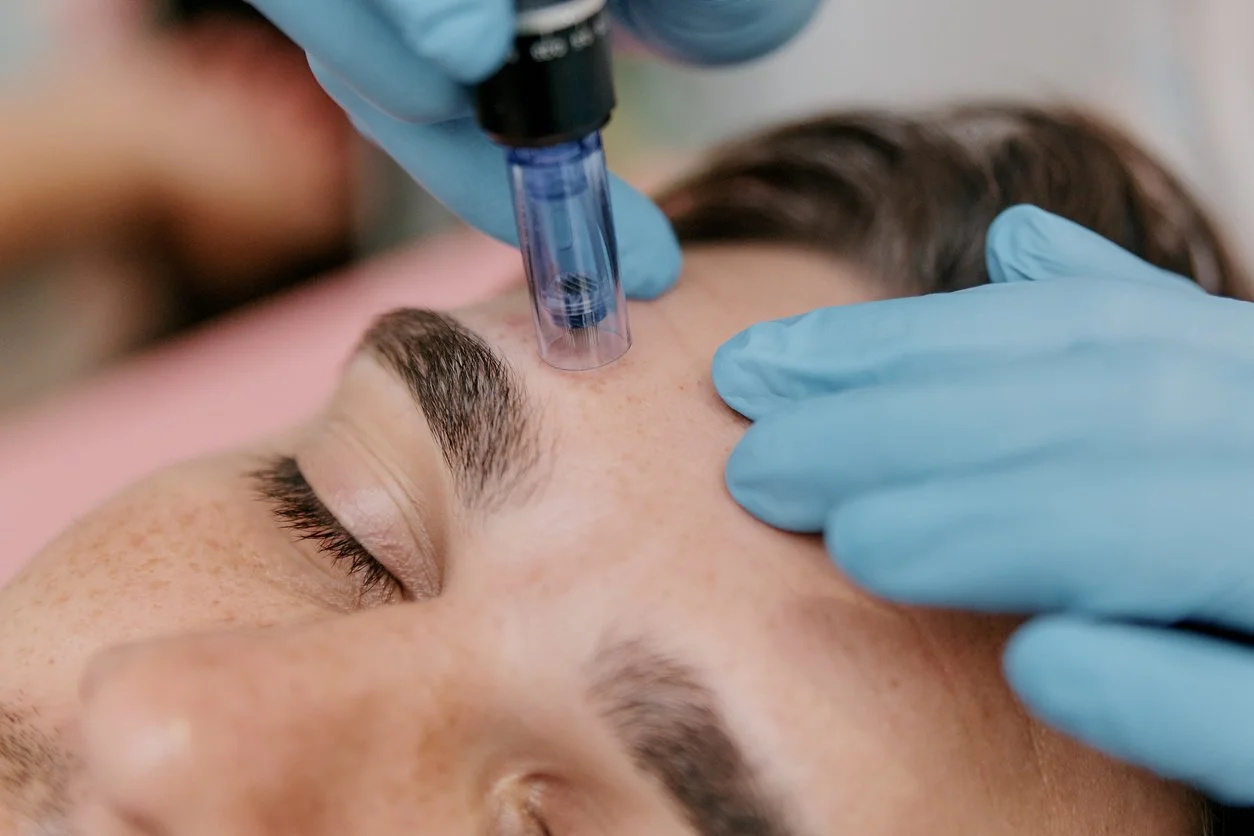
Microneedling uses very fine needles to create tiny, controlled punctures across the skin’s surface. That may sound more alarming than it is. The needles are small, the depth is precise, and the process is quick. What matters most is what happens afterward.
Your skin responds to these micro-injuries by activating its natural healing process and producing collagen and elastin. These proteins help keep skin firm, smooth, and resilient. As we age, production of both naturally slows.
Microneedling helps prompt the body to produce more collagen and elastin from within.
The results can include improved skin texture, reduced fine lines, smaller-looking pores, and a more even tone. For people dealing with acne scarring or hyperpigmentation, a series of treatments can also make a noticeable difference in how the skin looks and feels.
What microneedling can help with
Microneedling is used for a range of skin concerns, including:
• Fine lines and early signs of aging
• Uneven skin texture and enlarged pores
• Acne scarring and post-inflammatory marks
• Hyperpigmentation and uneven skin tone
• Dullness and loss of firmness
• Overall skin hydration and glow
Results vary depending on your skin and your goals, but many people notice visible changes after a single session. For more lasting improvement, a series of treatments spaced four to six weeks apart is often recommended.
Two microneedling options
Chee Dynamic offers two ways to experience microneedling, depending on how simple or comprehensive you want your treatment to be.
Just Microneedling is a no-frills, cost-effective option focused entirely on microneedling. It does not include numbing cream, red light therapy, or holistic acupuncture. It is a great value for people who want the effectiveness of microneedling without the additional treatments.
And it is not as scary as it sounds. Dr. Karin even performs microneedling on herself without lidocaine.
For a more comprehensive experience, our Microneedling + Acupuncture treatment combines microneedling with holistic acupuncture, red light therapy, and a take-home hyaluronic acid serum.
Every microneedling treatment at Chee Dynamic includes the face, neck, and chest. Many med spas charge extra to treat the neck and chest, but Dr. Karin includes these areas as part of the treatment.
How we do it differently
A lot of places offer microneedling. What sets Chee Dynamic apart is the option to combine microneedling with a more holistic treatment approach.
Our Microneedling + Acupuncture sessions include holistic acupuncture, red light therapy, and a take-home hyaluronic acid serum for post-treatment hydration.
The acupuncture piece is worth explaining.
Facial skin does not exist in isolation from the rest of the body. Circulation, hormonal balance, stress levels, and sleep quality can all influence how your skin looks and feels.
Acupuncture supports the internal environment that your skin reflects. It allows us to look beyond the surface and take a more holistic approach to skin health.
Red light therapy supports the skin’s recovery and collagen-building response following microneedling.
The hyaluronic acid serum goes home with you because the skin is especially receptive to hydration after treatment. This helps support moisture and comfort during the recovery process.
What to expect
Dr. Karin starts every session with a conversation about your skin concerns, goals, and any specific areas you want to focus on. Treatment is tailored to you rather than taking a one-size-fits-all approach.
For Microneedling + Acupuncture sessions, numbing cream is applied before treatment for added comfort. The Just Microneedling option is performed without numbing cream.
Most people describe the treatment as a mild warmth or tingling sensation rather than significant discomfort.
Afterward, the skin may look flushed, similar to a mild sunburn. This typically settles within 24 to 48 hours.
A couple of things are important to plan around. If you have had Botox recently, wait six weeks before scheduling microneedling. You should also limit sun exposure for at least two weeks after your appointment while the skin is actively repairing.
If you are curious about microneedling or want to talk through whether it is the right fit for your skin, have a look at what a first visit involves. We are always happy to answer questions before you book.
Fall Microneedling Special
Save 20% when you purchase a series of four treatments:
4 Microneedling + Acupuncture sessions: $800 — save $200
4 Just Microneedling sessions: $480 — save $120

Late Summer in Chinese Medicine: Why Your Body Feels It Too
There is a particular kind of fatigue that shows up in late summer. Not the worn-out feeling that follows a hard week, but something more intangible. Maybe your digestion feels a little off, your sleep is lighter than usual, or you have noticed a general sense of running on empty even when nothing specific seems wrong.
In Chinese medicine, these subtle shifts are closely connected to the season and the way our bodies respond to this time of year.
By Dr. Karin Jespersen | Chee Dynamic Acupuncture, Seattle WA
There is a particular kind of fatigue that shows up in late summer. Not the worn-out feeling that follows a hard week, but something more intangible. Maybe your digestion feels a little off, your sleep is lighter than usual, or you have noticed a general sense of running on empty even when nothing specific seems wrong.
In Chinese medicine, these subtle shifts are closely connected to the season and the way our bodies respond to this time of year.
Late Summer as its own season
Most of us think in four seasons. Chinese medicine works with five, and Late Summer is its own distinct phase, falling between the peak outward energy of Summer and the quieter, inward pull of Fall.
This transitional period is associated with the Spleen and Stomach, the digestive center of the body in East Asian medicine. While Summer is expansive and outward, all momentum and heat, Late Summer asks something different of us. It is the season of harvest, of slowing just enough to absorb what we have taken in. Physically and otherwise.
When that transition is supported, it feels like a natural exhale before Fall arrives. When it is not, especially during a year like this one with compounding heat, dryness, and poor air quality, the body starts to show the strain.
What Spleen imbalance actually looks like
The Spleen in Chinese medicine governs digestion, energy production, and the body's ability to turn food and fluids into nourishment it can actually use. When it is taxed by heat, stress, irregular eating, or a summer that asked a lot, it shows up in ways most people recognize:
Fatigue that sleep does not fully fix
Bloating, sluggish digestion, or loose stools
Craving sweets or feeling unsatisfied after meals
Brain fog or difficulty concentrating
Anxiety or low-level worry that is hard to shake
Dry skin, lips, or throat, especially with wildfire smoke in the air
None of these on their own are alarming. Together, they are the body signaling that it needs some support before the seasonal shift into Fall.
How to support yourself right now
The good news is that Late Summer responds well to relatively simple changes. The Spleen likes warmth, routine, and ease. It dislikes cold and raw food and erratic schedules, all of which tend to accumulate over a busy summer.
A few things that make a real difference this time of year:
Hydration, and not just water. Electrolytes matter, especially in the heat. Look for drinks that are low in sugar and that you will actually stick with.
Warm cooked foods like soups, broths, roasted vegetables, sweet potatoes, and white rice. These are easier on digestion than raw salads and smoothies, which the Spleen has to work harder to process.
Cooling foods for heat like cucumbers, peaches, berries, zucchini, and leafy greens. Hydrating and light.
Steady routine. Consistent mealtimes and sleep do more for the Spleen than almost anything else.
Acupuncture and herbal medicine can also be especially helpful right now. Seasonal transitions are exactly when the body benefits most from support, before an imbalance becomes harder to shift.
The emotional piece
The Spleen is also associated with the mind's tendency to overthink and worry. When it is depleted, the mental loop of rumination tends to get louder. If you have noticed more anxiety or mental restlessness lately, it may be worth looking at it through this lens rather than just pushing through.
Chinese medicine has always understood that the physical and emotional are part of the same system. Supporting your digestion and your body's ability to rest and replenish does not just make you feel better physically. It genuinely shifts the mental landscape too.
If you are feeling the weight of late summer and want some support heading into Fall, take a look at what a first visit looks like and come visit us in the clinic. We would love to see you.

Why Summer is Actually the Best Time to Start Acupuncture
We're roughly halfway through the Chinese lunar year right now. A natural midpoint that traditional Chinese medicine has always recognized as a meaningful time to check in with yourself. Not to slow everything down. To make sure the pace you're keeping is sustainable. That's exactly where acupuncture comes in.
By Dr. Karin Jespersen | Chee Dynamic Acupuncture, Seattle WA
Summer has a way of making everything feel urgent. More plans, more events, more pressure to make the most of the long days. It's energizing, and it's also exhausting in a way that sneaks up on you.
In Traditional Chinese medicine, Summer is the season of the year that matches the Yang energy. This energy is expansive, outward, and active. It's the energy of doing. And while that aligns beautifully with long Seattle evenings and everything this city comes alive with in July, it also means most of us are running on fumes by mid-Summer without fully realizing it.
Recently, I had the opportunity to offer ear seeds at Hotel Crocodile during an intimate evening of ambient and experimental music focused on connection and healing. It was a wonderful reminder that wellness can be woven into all kinds of spaces, including music, art, and community events.
Yang is great. Until it isn’t.
The yang half of the year, Spring through Summer, is when most people feel their best: more energy, more motivation, longer days. The body wants to move and engage. That's not a problem. That's the season doing what it's supposed to do.
But the body needs its counterpart. Yin energy: rest, restoration, inward quiet, doesn't disappear in Summer. It just gets deprioritized. And when that balance tips too far for too long, you start to see it: disrupted sleep, heightened anxiety, a kind of wired tiredness that doesn't resolve no matter how many good nights you string together.
Acupuncture works by helping the body find its own equilibrium. It doesn't force rest or suppress energy. It just creates the conditions for the system to regulate itself, so you can stay in the game without burning out.
What Summer acupuncture actually addresses.
People come in this time of year for all kinds of reasons. Some are dealing with:
• Heat-related fatigue and that heavy, low-energy feeling that sets in by mid-afternoon
• Sleep that's lighter or more fragmented than usual
• Anxiety that picks up with the social and professional tempo of the season
• Headaches, often tied to dehydration, heat, or tension that's been building
• Digestive changes, which are common as diet and routine shift in Summer
• Old injuries that flare up with increased activity
Others come in simply because they've been meaning to try acupuncture, and Summer finally gave them the mental space to do it. That's a valid reason too.
The body and mind aren’t separate, and Summer proves it
One thing I notice every Summer is how clearly the physical and mental show up together. The person who comes in for a tension headache is also not sleeping. The person who can't wind down at night is also carrying tightness in their shoulders they've stopped noticing. The person who feels flat and unmotivated is also dealing with digestion that's been off for weeks.
Traditional Chinese medicine doesn't treat these as separate problems. It looks at the whole pattern and works with it. That's part of why people often leave sessions feeling better in ways they didn't expect. The thing they came in for improves, and so does something else they'd been living with so long they forgot it wasn't normal.
Summer is the most yang season of the year: full of energy and momentum. But every season needs its balance. Acupuncture helps you find yours.
A good time to start. A better time to continue
If you've been thinking about trying acupuncture or traditional Chinese Herbal Medicine, Summer is a genuinely good time to start. Your body is active and responsive, and starting treatment when you're not in crisis gives us more room to work with your baseline rather than just putting out fires.
If you're already a patient, this is a good moment to check in. What felt fine in Spring may have shifted. A session or two with Summer in mind can make a real difference in how the rest of the season feels.

Ear Seeds: Small But Mighty
Ear seeds are tiny metal beads placed on specific points of the outer ear. They offer gentle, continuous pressure on acupressure points and can be worn for up to a week at a time.
By Dr. Karin Jespersen | Chee Dynamic Acupuncture, Seattle WA
One of my favorite parts of acupuncture is finding ways to bring it outside the treatment room and into spaces where people naturally gather. Ear seed pop-ups are a simple, accessible way to introduce the benefits of East Asian medicine at corporate events, networking groups, happy hours, wellness fairs, conferences, concerts, and community gatherings.
Recently, I had the opportunity to offer ear seeds at Hotel Crocodile during an intimate evening of ambient and experimental music focused on connection and healing. It was a wonderful reminder that wellness can be woven into all kinds of spaces, including music, art, and community events.
So what are they?
Ear seeds are tiny metal beads placed on specific points of the outer ear. They offer gentle, continuous pressure on acupressure points and can be worn for up to a week at a time.
In East Asian medicine, the ear is understood as a microsystem of the entire body—meaning different areas of the ear correspond to different organs and physiological systems. By stimulating specific points, we can influence how the body is functioning and feeling, sometimes quite quickly.
One of the points I almost always include is Shen Men, located in the upper cartilage of the ear. It’s known for its calming effect on the nervous system and is often used to help reduce stress and promote a sense of ease and regulation.
What can ear seeds help with?
Quite a lot, actually. Here's what I see them used for most often:
Stress and anxiety. The most common reason, and often the most immediate result
Insomnia
Headaches and chronic pain
Digestive issues
Appetite and cravings
Nervous system regulation
Ear seeds can be worn for up to a week. You can press on them for a few seconds whenever you need extra support, however they are working without you needing to activate them. Most people forget they're there within the first hour, which is kind of the point — they're working in the background whether you're thinking about them or not.
Ear seeds at events
Bringing ear seeds into group settings has become one of my favorite aspects of this work. Corporate wellness events, employee appreciation gatherings, networking mixers, wellness fairs, and concerts — they fit naturally into all of it. People come over curious, try it, and leave genuinely surprised.
Interested in ear seeds at your next event? I work with organizations, artists, and event organizers all over Seattle. Reach out and let's talk.
For existing patients
If you're already coming in regularly, ear seeds can be added at the end of any session. They extend what we’re working on in the treatment room. Just mention it when you book.
And if ear seeds are your first introduction to Chee Dynamic, welcome. There's a lot more to explore.
If you’d like to experience ear seeds or acupuncture, schedule a visit! I’d love to see you in the clinic.

Acupuncture for fertility and IVF: How it works and when to start
When you're navigating a fertility journey, every decision feels significant. You're thinking carefully about what you put in your body, how you manage stress, what your protocol looks like, and how you can best support it.
By Dr. Karin Jespersen | Chee Dynamic Acupuncture, Seattle WA
When you're navigating a fertility journey, every decision feels significant. You're thinking carefully about what you put in your body, how you manage stress, what your protocol looks like, and how you can best support it. Acupuncture fits naturally into that picture, and many patients come to Chee Dynamic wanting to understand more deeply how it works, when to start, and what to expect alongside an IVF cycle or natural conception effort.
Here's a clear look at the mechanisms behind fertility acupuncture, how timing works within a treatment protocol, and what care at Chee Dynamic looks like.
What the research shows
The short answer is that acupuncture has demonstrated meaningful effects on reproductive outcomes in multiple clinical studies, and the research has been building for years.
A 2002 study published in Fertility and Sterility found that women who received acupuncture on the day of embryo transfer had significantly higher pregnancy rates than those who did not. That study drew a lot of attention and launched a wave of follow-up research. The findings have been mixed across individual studies, as they often are in this area, but a 2012 systematic review published in the Journal of Integrative Medicine found acupuncture improved clinical pregnancy rates when used alongside IVF. A more recent meta-analysis, covering trials through the 2020s, supported the use of acupuncture as a complement to assisted reproductive technology, particularly for improving ovarian response and uterine receptivity.
The World Health Organization includes female infertility on its list of conditions for which acupuncture has demonstrated evidence of effectiveness. That's not a fringe endorsement.
This doesn't mean acupuncture is a replacement for your reproductive endocrinologist or your IVF protocol. It means there is legitimate evidence to treat it as a meaningful complement. As always, consult your physician for any medical advice.
What acupuncture Is doing
Fertility isn't one thing, so acupuncture doesn't work in just one way. Several overlapping mechanisms are relevant here.
It improves blood flow to the uterus and ovaries. Uterine lining thickness is one of the key variables in successful embryo transfer. Acupuncture increases microcirculation in the pelvic region, which supports a thicker, more receptive endometrium. Better blood flow to the ovaries also supports follicular development and egg quality.
It regulates the hormonal environment. Acupuncture influences the hypothalamic-pituitary-ovarian axis, the hormonal feedback loop that governs your cycle. For women with irregular cycles, PCOS, or poor ovarian response, this regulation can make a real difference. It's also part of why acupuncture is often used before an IVF cycle begins, not just on transfer day.
It addresses the stress response. This matters more than people realize. Stress isn't just an emotional experience. It triggers a hormonal cascade involving cortisol and adrenaline that can directly interfere with reproductive signaling. Fertility treatment is, by any measure, a stressful process. Understanding how stress physically disrupts hormone levels and why calming the nervous system is part of fertility care, not a luxury add-on, changes how most patients think about this aspect of treatment.
It can reduce side effects from fertility medications. The hormone stimulation involved in IVF often causes bloating, cramping, fatigue, and mood swings. Acupuncture consistently helps patients manage these symptoms, which matters both for comfort and for adherence to the protocol.
How herbal medicine fits In
For some patients, acupuncture is paired with Chinese herbal medicine, which has its own body of research in the context of fertility care. Herbs that tonify blood and support kidney function have been used in this context for centuries, and modern research has examined specific formulas for their effects on FSH levels, follicle development, and luteal phase support.
That said, herbal medicine needs to be handled carefully during active IVF, particularly around stimulation and transfer. Dr. Karin coordinates with your reproductive endocrinologist when necessary. She adjusts her prescriptions based on where you are in your protocol. If you're curious about how acupuncture and Chinese herbal medicine work together and how that applies to a fertility treatment plan, it's worth reading through how she approaches both modalities as a combined system.
When to start, and what the timeline looks like
Timing matters. Egg development takes roughly three months from primordial follicle to ovulation. Starting acupuncture two to three months before an IVF retrieval gives treatment the most runway to influence egg quality and the hormonal environment going into stimulation.
That said, it's never too late to start. Patients who begin closer to their cycle still benefit, particularly for stress management, medication side effects, and preparation for transfer.
A typical treatment course for fertility support involves weekly sessions. The frequency and focus shift depending on where you are in your cycle or protocol. Sessions before retrieval look different from sessions before transfer, which look different from sessions during early pregnancy.
Here's a general framework for how timing often works alongside IVF:
2 to 3 months pre-cycle: Focus on improving ovarian function, regulating the cycle, building uterine lining, and reducing baseline stress
During stimulation: Supporting follicular development and managing medication side effects
Around retrieval: Calming the nervous system and reducing post-procedure discomfort
Around transfer: Optimizing uterine receptivity; typically a session before or after transfer on the same day
Early pregnancy: Supporting implantation, reducing early pregnancy anxiety, and managing nausea and fatigue
What trying to conceive naturally looks like with acupuncture
Not everyone is pursuing IVF. For patients trying to conceive naturally, acupuncture addresses the root imbalances that can make conception harder: irregular ovulation, thin uterine lining, elevated FSH, luteal phase deficiency, or chronic stress that's keeping the body in a state that's not conducive to reproduction.
For women with PCOS, acupuncture and herbal medicine are particularly well-studied. Research has shown regular acupuncture can help normalize menstrual cycles, reduce androgen levels, and improve ovulatory function over time.
Endometriosis is another area where acupuncture contributes meaningfully, both for pain management and for the inflammatory environment that can interfere with conception.
For a fuller picture of the women's health conditions Dr. Karin treats and the range of concerns that bring patients through our door, this page covers what we focus on and who we work best with.
What your first appointment looks like
A fertility intake at Chee Dynamic is longer and more thorough than most patients expect. Dr. Karin will ask about your cycle history, your reproductive workup, your sleep, your digestion, and your stress levels. She'll ask about your IVF protocol if you have one, and she'll review any labs or records you want to share.
Chinese medicine views fertility through a wide lens. The state of your overall system, your energy levels, how your digestion is functioning, whether you run warm or cold, how your sleep is, all of it is relevant to how she shapes your treatment plan. That integrative view is part of what makes this different from treating fertility in isolation.
Chee Dynamic is a women-owned practice, and Dr. Karin is a woman who has navigated her own experiences in healthcare. She knows what it feels like to have a concern brushed off, to have a symptom normalized when it shouldn't be, or to sit in a clinical setting and feel like a chart number rather than a person. That's a significant part of why she built this practice the way she did. Women going through fertility treatment deserve a provider who not only understands the physiology, but who understands the emotional weight of what you're carrying week to week. That's a different kind of listening, and it matters.
From there, you'll lie on a treatment table. The needles are hair thin. Most patients feel very little on insertion, and many fall asleep. They stay in place for 20 to 30 minutes. Everything is single-use and sterile.
If you want to know more before booking, our FAQ covers what to expect from a first visit, what to bring, and common questions patients ask before they come in.
The fertility journey takes a lot from people, emotionally and physically. Acupuncture won't replace your medical care, but for patients going through IVF, it's a well-supported tool for improving the conditions that matter most: a healthier hormonal environment, better uterine receptivity, and a nervous system that's working with you instead of against you.
If you're ready to get started or just want to talk through where you are in your process, we're here.

Does Acupuncture Really Help With Back Pain? A Seattle Patient's Guide
Does Acupuncture Really Help With Back Pain?
Back pain brings a lot of people through our door. Some come in after throwing out their lower back moving furniture. Others have been managing a slow, grinding tension between their shoulder blades for years and have just come to accept it as their normal. Some people are dealing with something more involved, like a herniated disc, sciatica that runs down the leg, or post-surgical recovery.
Whatever brings someone in, the question is almost always the same.
"Does acupuncture actually do anything for back pain, or is this mostly placebo?"
It's a reasonable thing to wonder. Here's a straight answer, backed by the research, along with what realistic treatment actually looks like.
So, does the research back it up?
It does. And more than most people realize.
The World Health Organization lists lower back pain as one of the conditions for which acupuncture has demonstrated effectiveness in controlled trials. A major 2012 meta-analysis in the Archives of Internal Medicine pooled data from nearly 18,000 patients across 29 rigorous trials. The finding: acupuncture outperformed both sham treatment and no treatment for chronic back and neck pain. That's a big study. Hard to dismiss.
Perhaps more surprising — the American College of Physicians now recommends acupuncture as a first-line, non-drug treatment for acute, subacute, and chronic low back pain. Right there alongside yoga and cognitive behavioral therapy. The mainstream medical community has been catching up, and the evidence is part of why.
This isn't folk medicine anymore. It's a recognized clinical option with a legitimate evidence base.
What's actually happening in the body?
Acupuncture works through a few overlapping pathways, none of which require buying into any particular belief system to benefit from.
Your nervous system responds
When needles are placed at specific points, they trigger responses in your peripheral and central nervous systems. Your body releases endorphins and enkephalins (its own painkillers), and the signals traveling from the pain site to your brain get modulated. That's part of why people often feel relief that outlasts the session itself. It's not just relaxation. Something is biochemically happening.
Muscle tension releases
A lot of back pain involves what's called muscle guarding, the body's reflexive clenching around a painful area. It's protective in the short term, and often becomes its own problem over time. Acupuncture, especially when dry needling techniques are applied to trigger points, can release tension in places that massage and stretching reach as effectively.
Inflammation quiets down
Chronic inflammation is a driver of persistent back pain. Research has shown that acupuncture can reduce certain pro-inflammatory markers in the body. Not a cure-all, but a meaningful piece of the puzzle for a lot of patients.
Blood flow improves
Tight, overworked tissue gets deprived of the circulation it needs to heal. Acupuncture promotes microcirculation in these areas, bringing oxygen and nutrients back to places that have been essentially starved of them.
What kinds of back pain tend to respond well?
Acupuncture is a strong fit for:
• Lower back pain. Both the acute "threw it out" kind and chronic patterns
• Lumbar muscle strain and spasm
• Sciatica and pain that radiates down the leg
• Upper back and neck tension
• Back pain during pregnancy
• Herniated or bulging disc pain
• Post-surgical recovery, alongside your care team
What your first visit at Chee Dynamic actually looks like
It won't feel like a typical clinic appointment. There's no five minute intake and a quick exam. Dr. Karin takes her time.
She'll ask about your back, but also about your sleep, digestion, energy levels, and stress. Chinese medicine views back pain as something that doesn't happen in isolation. Understanding the bigger picture leads to better treatment. It's a different way of thinking about the body, and most patients find it refreshing.
From there, you'll lie on a comfortable treatment table. The needles are hair-thin. Most people feel little to nothing on insertion, and many fall asleep. They stay in for 20 to 30 minutes. Everything used is single-use and sterile.
Many patients notice some improvement after that first session. For back pain, a typical treatment course is somewhere between 6 and 10 visits. If the problem has been going on for years, it usually takes longer than something that started a few weeks ago, and Dr. Karin will give you a realistic read on that. Come visit us today and find out your potential.